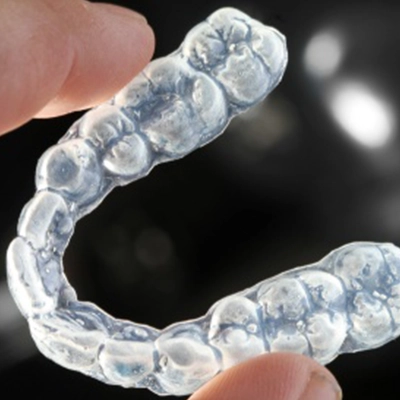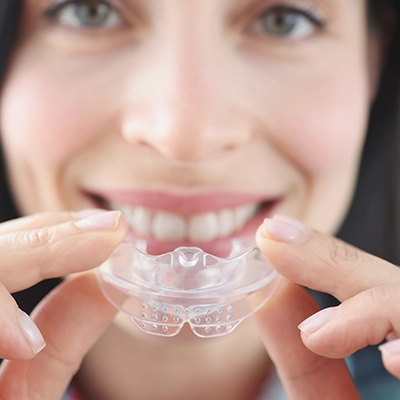
What Is a Dental Night Guard?
What Are the Signs You Need a Night Guard?
- Jaw soreness or stiffness after waking.
- Morning headaches near your temples.
- Facial muscle fatigue.
- Tooth sensitivity without a clear cause.
- Flattened, worn, chipped, or cracked teeth.
- Damaged fillings, crowns, or veneers.
- Tightness while opening your mouth.
- Cheek biting or tongue indentations.
- Grinding sounds during sleep.
Benefits of a Custom Night Guard
- Reduces enamel wear caused by tooth grinding.
- Lowers the risk of chipped or cracked teeth.
- Protects crowns, fillings, bridges, and veneers.
- Limits pressure on sensitive or weakened teeth.
- Reduces direct contact between upper and lower teeth.
- Fits securely around your natural bite.
- Feels less bulky than most store-bought guards.
- Supports easier breathing and speaking before sleep.
- Allows your dentist to check wear patterns over time.
- Provides long-term protection for your smile.
How Does a Custom Night Guard Protect Your Teeth?
What Happens During a Night Guard Appointment?
Review and Examination
Dental Impression or Digital Scan
The team records the shape of your teeth and bite. This record guides the design of your guard. The goal is a secure fit with even contact across the appliance.
Guard Fabrication
Fitting and Adjustment
Meet Dr. Subha C. Yerabollu
Cost of Night Guards in South Riding, VA
| Night Guard Type | Estimated Self-Pay Cost |
| Stock night guard | $3 to $25 |
| Boil and bite night guard | $15 to $30 |
| Mail-in custom night guard | $80 to $250 |
| Dentist-provided custom night guard | $300 to $1,000 |
DENTAL FINANCING OPTIONS AT PRIME FAMILY DENTISTRY
CASH
CHECK
DEBIT AND CREDIT
FSA
Why Choose Prime Family Dentistry for Night Guards?
- Detailed Bite Evaluation: A focused review of your symptoms, bite, tooth wear, and jaw comfort helps identify your specific treatment needs.
- Custom Night Guard Design: A custom night guard fits your teeth and bite to provide secure, comfortable, and consistent nighttime protection.
- Care and Cleaning Guidance: You receive clear instructions for wearing, cleaning, storing, and inspecting your appliance to maintain its condition and fit.
- Precise Fit Adjustments: Your dentist adjusts the appliance when needed to reduce pressure points, improve stability, and support comfortable daily use.
- Ongoing Appliance Monitoring: Routine dental visits help monitor wear, bite changes, appliance damage, and signs that replacement is needed.
- Protection for Teeth and Restorations: You receive guidance on protecting crowns, fillings, veneers, and natural teeth from damage caused by grinding and clenching.
Prime Family Dentistry is located at 24805 Pinebrook Rd, Ste. 316, South Riding, VA 20152. Call (703) 214-9126 or schedule online to request an appointment.
Schedule a Night Guard Consultation in South Riding, VA
FAQs
Will a night guard stop me from grinding my teeth?
A night guard protects your teeth by separating the upper and lower arches. It does not always stop the grinding habit. Your dentist will also review stress, sleep, medicines, and jaw habits when planning care.
Should I wear my night guard every night?
Follow the schedule provided by your dentist. Regular nighttime wear gives your teeth consistent protection. Contact the office if the guard causes pain, feels loose, damages your gums, or changes your bite after removal.
Does a night guard go on the top or bottom teeth?
A night guard fits over either the upper or lower teeth. Your dentist selects the arch based on your bite, dental work, comfort, tooth wear, and appliance stability. Both designs require a precise fit.
Is a custom night guard uncomfortable?
A custom guard should feel secure without pinching your gums or forcing your jaw into an unnatural position. A brief adjustment period is common. Persistent soreness, sharp edges, or sleep disruption need a dental review.
Does dental insurance cover a night guard?
Coverage differs by plan, diagnosis, and benefit limits. Ask the office for an estimate before treatment. You should also contact your insurer to review deductibles, frequency limits, exclusions, and required documentation.
When should I replace my night guard?
Replace your guard when it develops holes, cracks, sharp edges, heavy wear, odor, or a poor fit. Dental work and bite changes also affect fit. Bring your appliance to routine exams for review.